Blog
The Butterfly: Four Stages of Transformation, Four Stages in a Woman’s Journey
The Story Behind the Clip-Knix Nigeria Butterfly
A butterfly does not begin its life with wings. It goes through four remarkable stages of transformation before emerging in its full beauty. In many ways, this mirrors the journey of a woman through life.
At Clip-Knix Nigeria, the butterfly symbolises the evolution of a woman, from childhood to adolescence, adulthood and maturity. Each stage brings physical changes, new experiences, challenges and opportunities for growth.
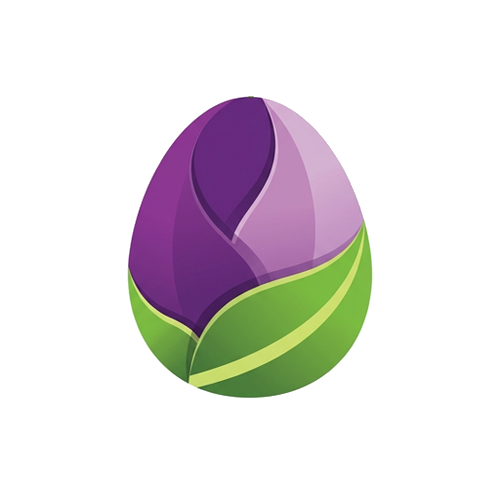
Stage 1
The Egg
Childhood (The Beginning)

Stage 2
The Caterpillar
Adolescence (Growth and Discovery)
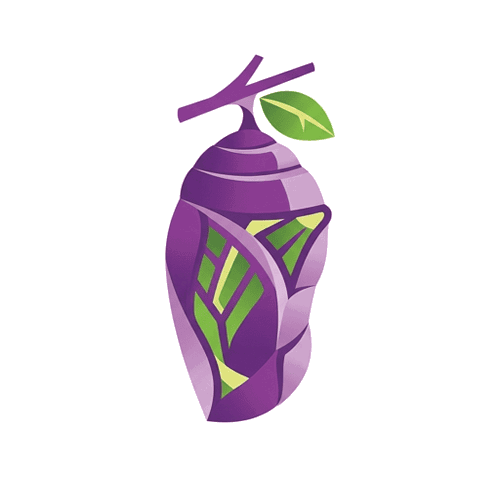
Stage 3
The Chrysalis
Adulthood (Transformation and Resilience)

Stage 4
The Butterfly
Is Reusable Period Underwear Hygienic?
Let’s separate the myths from the facts.
One of the biggest concerns about reusable period underwear is hygiene:
“If I wash it and wear it again, can it cause an infection?”
It’s an understandable question, particularly because reusable period underwear is still relatively new to many people in Nigeria.
The important thing to understand is that reusable does not mean unhygienic.
Period underwear is specifically designed to absorb menstrual fluid. Unlike ordinary underwear, it contains specialised absorbent and leak-resistant layers.
Does it cause infections?
There is no good evidence that properly used period underwear itself causes vaginal or urinary infections.
What matters is how it is used and cared for.
Just like any menstrual product, period underwear should not be worn beyond its capacity. After use, it should be washed according to the care instructions, dried completely and stored somewhere clean and dry.
A simple routine is:
Wear → Wash → Dry completely → Reuse
Never store period underwear while it is damp.
Is disposable automatically more hygienic?
No. Disposable and hygienic do not mean the same thing.
Disposable pads must also be changed regularly and handled with clean hands. Period underwear requires washing instead of disposal.
Good menstrual hygiene is about clean products and good hygiene practices, whether the product is disposable or reusable.
The bottom line
Properly designed, correctly washed and completely dried period underwear can be a safe, practical and hygienic menstrual-management option.
And because it is reusable, it can also mean less menstrual waste and less money spent repeatedly buying disposable products.
Reusable doesn’t mean dirty. It means use, wash, dry and use again.
Is Period Underwear Really More Affordable?
Don’t just look at what it costs today. Look at what it costs over time.
At ₦2,800 per pair, reusable period underwear may initially appear more expensive than buying a packet of disposable pads.
But there is one major difference:
Disposable pads are bought, used and thrown away. Period underwear is washed and used again.
Let’s do the maths. Suppose you buy five Clip-Knix period underwear at ₦2,800 each—one for each day of a five-day period.
5 × ₦2,800 = ₦14,000
If properly cared for and used for approximately two years, that’s around 24 menstrual cycles.Five days × 24 cycles = 120 period days.
So:
₦14,000 ÷ 120 = approximately ₦117 per period day.
That’s approximately ₦583 per five-day period.
Now think about disposable pads
Disposable pads have to be purchased every month. If someone spends ₦1,800 per menstrual cycle, that’s ₦43,200 over two years. At ₦3,000 per cycle, that’s ₦72,000 over two years. Compare that with ₦14,000 for five reusable pairs in our example. The potential difference is substantial.
But what about the upfront cost?
This is important. For some families, finding ₦14,000 at once may be harder than buying one packet of pads.
That’s why reusable period underwear could be particularly valuable in programmes supported by schools, NGOs, employers, governments and donors. Helping someone overcome the initial purchase cost can reduce the repeated monthly expense that follows.
The bottom line
Don’t ask only:
“How much does it cost today?”
Ask:
“How much will my period cost me over the next two years?”
Reusable period underwear turns menstrual protection from a repeated monthly purchase into something you already own.
Buy. Wash. Reuse. Save.
Clip-Knix — Dignity. Protection. Independence.
Figures are illustrative. Actual costs depend on flow, usage, disposable-pad prices, washing costs and product lifespan.
Can Period Underwear Really Protect Against Leaks?
Yes – but understanding how it works matters.
Period underwear may look like normal underwear, so it’s reasonable to wonder:
“Where does the menstrual blood go, and what stops it leaking onto my clothes?”
The answer is in the layers.
Period underwear isn’t simply thicker ordinary underwear. It contains a built-in absorbent protection system.
How does it work?
Think of it in three stages:
1. RECEIVE
The layer closest to your body receives menstrual fluid and helps move it away from the skin.
2. ABSORB
The absorbent core captures and holds the fluid.
3. PROTECT
A waterproof, leak-resistant barrier helps prevent the absorbed fluid from passing through to your clothes.
In simple terms:
Fluid enters → It is absorbed → It is retained → The barrier helps prevent leakage.
Can period underwear ever leak?
Yes. And we think women deserve an accurate answer.
Every menstrual product has a limit.
A disposable pad can leak when saturated. Period underwear can too.
That’s why choosing the right absorbency and changing before saturation are important.
Clip-Knix plans Medium, Heavy and Super-Heavy options so users can choose protection appropriate to their menstrual flow.
How can I reduce the chance of leaks?
Choose the right absorbency, wear the correct size and change when the garment approaches its capacity.
If you’re new to period underwear, learn how it performs with your own flow. On heavier days, carrying a clean spare pair can provide extra reassurance.
And Clip-Knix goes one step further
Our adaptive version incorporates Clip-Knix’s front-fastening design.
For women and girls who find pulling conventional underwear up and down difficult, including some people with limited mobility, this can make changing easier and support greater independence.
The bottom line
Period underwear is not magic. It’s textile technology.
Its layers are designed to absorb menstrual fluid, retain it and provide a protective barrier against leaks.
Choose the right absorbency. Change when necessary. Wash properly. Dry completely. Wear again.
Period Underwear Around the World
Nigeria, are we ready to catch up?
Australia: about 24%. UK: about 24%. USA: about 20%. Nigeria: about 1%.
These figures show how quickly menstrual care is changing and how much further Nigeria has to go.
Nigerians say, “Naija no dey carry last.” We adopt smartphones, digital banking, fashion and new technology quickly. So why should menstrual care be different?
Period Underwear Is Not New
Modern reusable period underwear began gaining commercial attention in the early 2010s. Australian brand Modibodi launched in 2013, while US brands such as Thinx helped bring the concept into public awareness. By the early 2020s, period underwear had moved from specialist online stores into mainstream retail.
🇦🇺 Australia about 24%
A study of young people aged 15–29 in Victoria found that 23.8% had used period underwear during their last period, while 37% had used at least one reusable menstrual product.
Modibodi launched in 2013 and helped educate consumers about how period underwear works, how to wash it and how it helps prevent leaks. Today, it is a recognised menstrual-care option. (PubMed Central)
🇬🇧 United Kingdom about 24%
By 2020–2021, period pants were appearing in mainstream UK shops, including M&S, Primark, Boots, Tesco and Sainsbury’s. (The Guardian)
Mintel reported that 19% of British women had purchased period underwear in the previous year, while 33% were interested in buying it. (Mintel)
More recent YouGov research found that 24% of UK women who currently have periods use period panties. (YouGov Docs)
From 1 January 2024, the UK removed VAT from qualifying reusable period underwear, recognising that it had become widely available in shops and online. (GOV.UK)
🇺🇸 United States about 20%
A US study of 11,455 participants found that 20% used period underwear, rising to approximately 22% among people aged 30–39. (PubMed)
That is roughly one in five participants.
🇫🇷 France from niche to millions of pairs
A French survey reported period-underwear use at around 7%, with higher use among some professional groups. (Readkong)
French government information also states that nearly 2 million pairs are sold annually in France. (French Ministry for Gender Equality)
🇪🇸 Spain 8.7%
A study of 22,823 participants found that 8.7% used menstrual underwear, rising to 11.3% among those aged 26–35.
Overall, 54.9% used some form of reusable menstrual product. (PubMed Central)
🇳🇬 And Nigeria?
A Nigerian menstrual-health market report found that period-underwear only use was approximately 1% nationally. Single-use pads accounted for 67.1%, while cloth accounted for 31.2%. (SHF)
This does not necessarily mean Nigerians do not want period underwear. It may mean that millions have never been properly introduced to it.
Recent Nigerian research among female medical students and healthcare professionals found high awareness of reusable menstrual products but low actual use. (MedRxiv)
Naija No Dey Carry Last
Australia, Britain and America did not reach today’s figures overnight.
Consumers had questions:
Will it leak? Is it hygienic? How do I wash it? Can I wear it for hours? Why change from pads?
Those questions are normal. Consumers tried the products. Retailers stocked them. Awareness grew. Technology improved. Governments recognised reusable menstrual care.
What once seemed unfamiliar became ordinary.
Nigeria’s Turn
This is where Clip-Knix Nigeria comes in.
Nigerian women and girls deserve more menstrual-care choices, including reusable period underwear designed for comfort, absorbency, leak protection, affordability and sustainability.
We intend to manufacture it in Nigeria, is not simply an import or a foreign trend.
Make it here. Create Nigerian jobs. Build Nigerian manufacturing capability. Reduce dependence on disposable products. Make reusable menstrual care more accessible to African women and girls.
Nigeria may be starting at around 1%, but every country had a starting point.
The period-underwear revolution has already begun around the world.
Now it is Nigeria’s turn.
Learn more at www.clip-knix.com